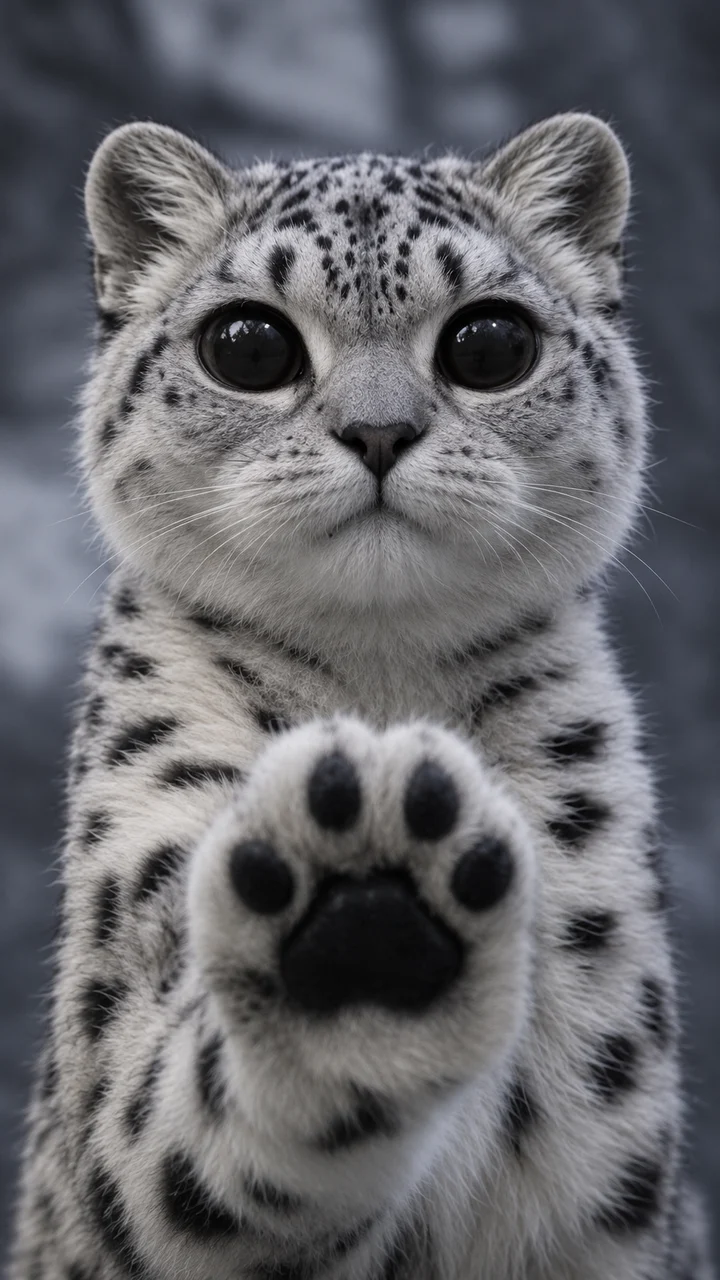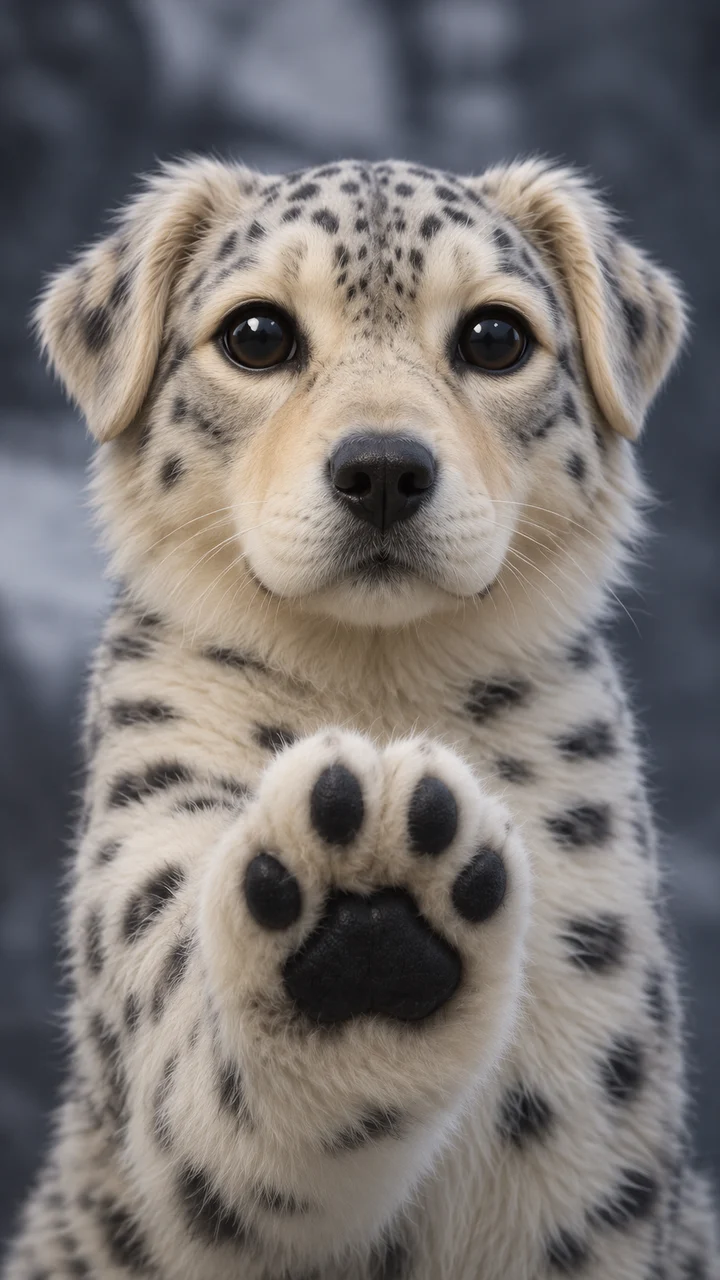



The face stays behind the reaching paw
The paw is not a second face or a decorative border. It sits in the foreground, pads facing the viewer, while the large eyes remain visible behind it. This close, front-facing composition gives “paws at you” its meaning: a small reaching gesture that can feel affectionate, pleading or playfully demanding. Keep the background quiet so the eyes and pads remain the first things you notice.